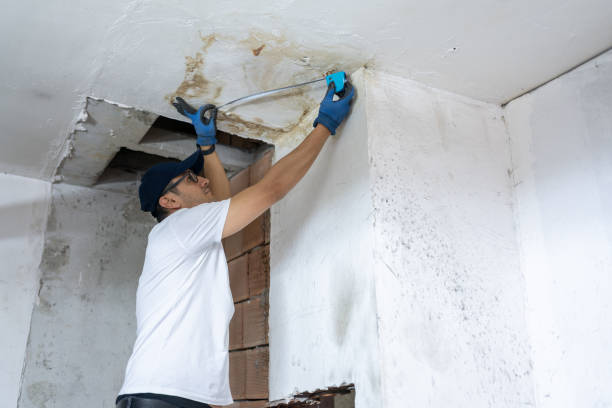
The IICRC S500 standard sorts water into three categories by how contaminated it is. Category 1 is clean water from a sanitary source, like a supply line or a tub faucet. Category 2, gray water, carries some contamination: dishwasher or washing machine discharge, a toilet overflow with urine but no feces, aquarium water. Category 3, black water, is grossly contaminated: sewage, floodwater from outside, toilet backflow with feces and any water that has sat long enough to grow bacteria. Water gets worse with time and contact, so a clean supply line leak left for several days in a warm room can be treated as Category 2 or 3.
Separate from category, the class of water (1 to 4) describes how big the drying job is. Class 1 is a small area with low-porosity materials. Class 2 is a whole room with carpet and wet walls up to about two feet. Class 3 means water came from above and soaked walls, ceilings and insulation. Class 4 covers bound water in dense materials like hardwood, plaster, concrete and stone, which need specialty drying with low humidity and long dry times.
| Material | Usually dried and kept when | Usually replaced when | What the contractor checks |
|---|
| Drywall | Category 1 water, caught early, board still firm, no sagging, no swelling at the seams. Often dried in place with air movers, dehumidifiers and cavity drying. | Category 2 that sat for days, any Category 3, soft or crumbling board, sagging ceilings, visible mold. A flood cut usually goes 2 to 4 feet up, above the wet line. | Pin meter readings against a dry reference wall, thermal scan for wicking height, insulation behind the wall. |
| Carpet and pad | Category 1, wet less than a day or two, carpet not delaminating. Pad is often replaced even when the carpet stays, since it is cheap and holds water. | Any Category 3 water, carpet that has delaminated from its backing, odor that does not clear, wet pad under heavy furniture for days. | Water category, how long it has been wet, backing condition, tack strip and subfloor moisture. |
| Hardwood | Mild cupping caught early often flattens with specialty floor drying mats and desiccant dehumidifiers. Refinishing may follow once it reaches equilibrium. | Severe cupping or crowning, buckling off the subfloor, black staining, boards that stay wet after a full drying cycle, any Category 3. | Moisture content of the wood and subfloor compared with an unaffected room, cup depth, board type (solid or engineered). |
| Laminate and LVP | LVP over a sealed concrete slab can sometimes be lifted, dried and relaid if the planks are intact. Rigid core vinyl handles water better than laminate. | Laminate with a fiberboard core swells and peels and almost never recovers. Any floating floor with water trapped under it for days, or a Category 3 loss. | Edge swelling, whether water is trapped under the floor, underlayment type, subfloor or slab moisture. |
| Cabinets | Solid wood boxes and face frames with dry interiors. Removing the toe kick lets air movers dry the space under the base cabinets without pulling them. | Particleboard or MDF bases that swelled, delaminated veneer, mold under the sink deck, any Category 3 contact. | Box material, toe kick cavity moisture, wall behind the cabinet, countertop removal risk if cabinets come out. |
| Insulation | Closed-cell spray foam and some rigid foam boards resist water and may stay if the cavity can dry. | Wet fiberglass batts lose loft and hold water against the framing. Wet blown-in cellulose packs down and is nearly always removed. Any insulation touched by Category 3. | Insulation type, whether the vapor barrier traps moisture, framing moisture after removal. |
Sagging ceilings, sewage odor and visible mold are signs to stop, leave the room and call +1-877-637-9008 right away. A ceiling holding water can come down without warning, and Category 3 water is a health hazard. The contractor can make it safe before anyone works in the space.